Home/Teams/IPL 2026 Retention Rules & Squad Construction
TEAMS
IPL 2026 Retention Rules & Squad Construction: How Franchises Build the Playing XI You Face
Every IPL 2026 fantasy team you build lives or dies by the same 25-player squad a franchise assembled months earlier. Here is what each retention rule, Right-to-Match card, Impact Player slot and purse window actually does to the playing XI you face on match day.
By Come Sports Newsroom·11 min read·Evergreen explainer
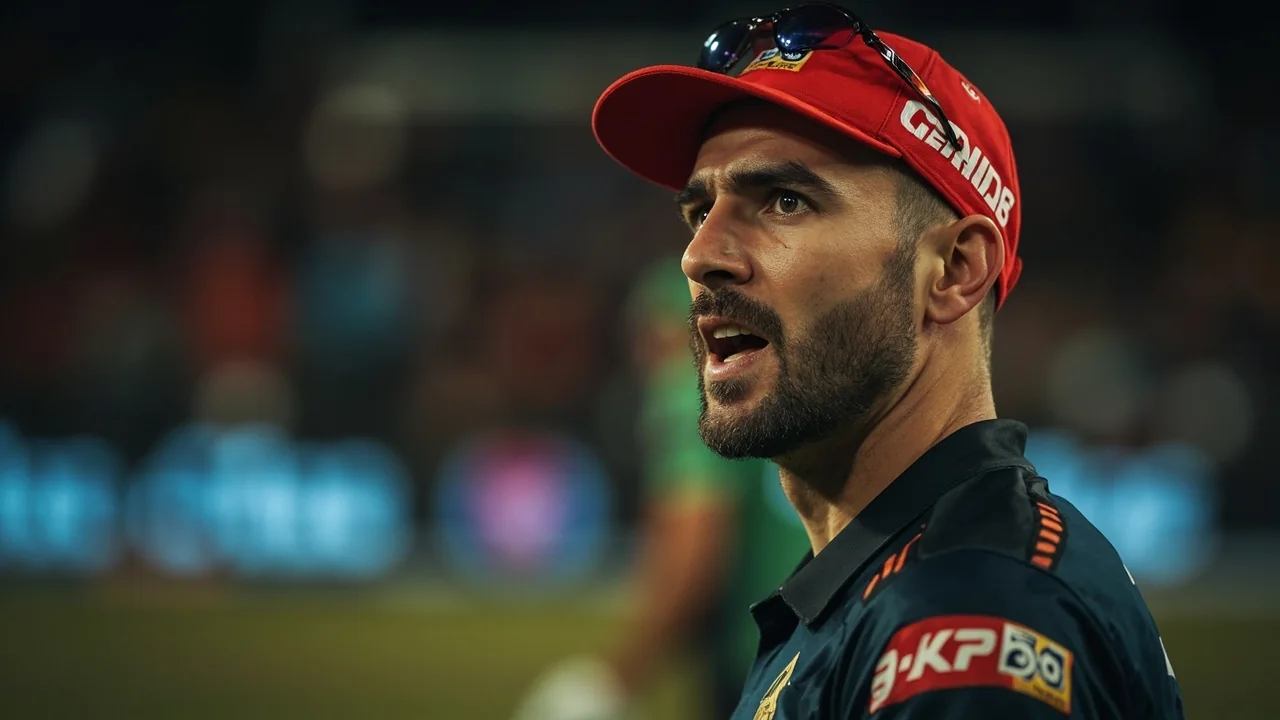
Editorial photograph for the IPL 2026 retention rules explainer. No franchise logos, no players, no copyrighted brand marks are depicted.
Compliance Notice: Come Sports is a skill-based fantasy sports platform operating in India. 18+ in permitted states only. Play responsibly.
If you have ever lost a fantasy contest by two points because a bowler you picked turned out to be the Impact Player, not the XI player, you already know the lesson this explainer is built around: the squad a franchise assembles off the field shapes the playing XI on the field, and the playing XI is the only thing your fantasy points can be scored against. IPL 2026 retention rules, the Right-to-Match (RTM) mechanic, the Impact Player regulation and the auction purse together determine who is in that XI on any given match day. Read the rules once and the squad moves on every franchise stop making sense.
The aim here is practical. For each franchise-side lever — retention cap, RTM card, purse balance, Impact Player slot, uncapped-player rules and trade window — the explainer below shows how the lever changes the 25-player squad and how that squad change ripples into the playing XI and your fantasy team selection. Specific IPL 2026 player names, contract figures and franchise decisions are deliberately left as illustrative examples; the verified framework is the rule, not the named transaction.
The decision a franchise faces before every retention window
The first question every IPL franchise answers before a retention window is whether to retain, RTM, or release. Each of those choices carries a price tag and a roster consequence, and the three together decide what the franchise can spend in the next auction. A team that retains four players pays for those four slots out of its pre-auction purse and arrives at the auction table with a thinner wallet than a team that retains two. A team that uses fewer retentions but burns RTM cards at the auction can keep core overseas players without paying the full retention premium. The choice is not which player is best in isolation but which combination of retentions and RTMs leaves the franchise with the most balanced squad on match day.
Practically, the decision tree looks like this. If the franchise has an irreplaceable Indian core — a captain who has held the side for a decade, a wrist-spinner who owns a specific venue — retention is the cheapest insurance because the player has signalled he will not enter the auction pool. If the franchise has an overseas all-rounder on a hot streak but the player is mid-tour and contract-uncertain, an RTM card at the auction is the smarter bet: the franchise only pays if another team raises the paddle. If the player is ageing, injury-prone or out of form, release-and-rebuy through the auction is the highest-upside path even though it carries re-signing risk.
For fantasy purposes this decision tree matters because retained players almost always open the season in the XI while auction buys spend the first two weeks on the bench as franchises trial combinations. A fantasy captain who knows which of his picks were retained, which were RTM and which were bought in the auction has a meaningful edge on which player will bat at three on a given match day.
How the retention cap turns into a salary ladder
The IPL retention cap is a fixed ceiling: a franchise can retain up to a maximum number of players across multiple pricing bands. For a typical IPL cycle the bands run from a top tier (highest price, often reserved for the captain or the franchise face) down through three or four tiers, with each band having a fixed deduction from the auction purse. The exact pricing ladder is reset by the IPL Governing Council before every mega-auction cycle, but the structure — top-heavy tiers with a few slots and a tail of lower-priced retentions — is constant.
The ladder forces a trade-off. Retaining one player at the top tier consumes more purse than retaining two players at lower tiers, even though the franchise gets one additional body in the squad. Franchises that pick the top-tier route typically do so to lock a generational player — a Kohli-equivalent, a Rohit-equivalent — whose auction price would otherwise dwarf the retention price. Franchises that pick the multi-tier route typically do so to keep a young Indian core intact across cycles.
The salary-ladder consequence is most visible in the auction purse balance. A franchise that has used three retention slots arrives at the auction with a smaller wallet and must shop in the mid-tier player pool. A franchise that has used one retention slot arrives with a near-full purse and can bid aggressively for two marquee players. The fantasy implication is that franchises shopping in the mid-tier pool tend to field deeper batting line-ups because they could afford more batting buys; franchises shopping in the marquee pool tend to field two stars and eight squad fillers.
The Right-to-Match card and why it has replaced full retention for overseas stars
The RTM card is the auction-side mirror of retention. Instead of locking a player pre-auction at a fixed retention price, the franchise waits for the auction to start, lets other teams bid the player up, and then matches the winning bid to keep the player. The RTM card has one slot per franchise per cycle (or in some cycles two, depending on Governing Council rules) and is the dominant tool for keeping overseas players.
The mechanic exists because overseas players face currency, visa and tour-schedule risk that Indian players do not. A franchise that fully retains an overseas player at the top tier commits the highest purse deduction to a player who may pull out due to national duty, injury, or a county contract clash. The RTM card solves that: the franchise only pays if the auction reaches a price the franchise considers worth the risk. If no team bids, the player enters the unsold pool and the franchise loses nothing.
For fantasy players, the RTM result is the most informative signal of a franchise’s intent. An RTM-used player will be in the playing XI from match one of the cycle, because the franchise spent auction-cycle purse to keep him. A fully retained player is even more certain but cost the franchise more before the auction, which compresses the budget for the rest of the squad. The pattern to watch is RTM for overseas match-winners and full retention for Indian cores — that pattern tells you where each franchise’s batting and bowling depth will land.
The auction purse and the marginal-cost logic of squad depth
The auction purse is the single number that decides whether a franchise fields a top-heavy XI or a balanced XI. Every rupee spent on retentions, RTMs and marquee buys comes out of the purse, and the remaining purse has to cover the full 25-player squad plus the support staff share. A franchise that walks into the auction with 40% of the purse already committed has 60% to fill 18+ slots, which forces average per-player spending of roughly 3-4% of the remaining purse. A franchise that walks in with 20% committed has 80% to fill 18+ slots, which lets average spending climb to 5-6% per slot.
The marginal-cost logic is what shapes squad depth. A franchise that can spend 5-6% per slot can afford a full bench of 7-8 credit equivalents: a backup wicketkeeper-batsman, two reserve seamers, a backup spinner, an extra all-rounder and a developmental uncapped player. A franchise that can only spend 3-4% per slot fills its bench with minimum-wage buys who are useful only as injury cover. The fantasy consequence is that franchises with deeper benches have more Impact Player and substitution options on any given match day, while thin-bench franchises are locked into the same XI for the full season.
Bench depth also drives form volatility. A franchise with a deep bench rotates players based on match-up, which creates week-to-week captain-pick uncertainty for fantasy users. A franchise with a thin bench plays its best XI every match, which makes captain picks predictable but reduces the upside of catching a breakout performance from a promoted reserve. Both setups are legitimate fantasy strategies; the key is to know which type of franchise you are picking from each week.
The Impact Player rule and how it has changed the playing XI
The Impact Player rule, introduced a few cycles ago and retained for IPL 2026, lets each franchise name four substitutes at the toss and replace one of them with any player from the four-person list at any point during the match, typically before the 14th over of the innings or the 10th over of the chase. The substituted player can bat or bowl; the player he replaces can no longer take part in the match. The rule has turned the playing XI into a 12-player decision space instead of an 11-player one, and that decision space matters more in fantasy than most users realise.
The Impact Player slot has three common uses. First, a like-for-like swap: a batting XI that loses an opener to a slow start brings in a power-hitter for the middle overs. Second, a pitch-reading swap: a captain who reads the surface as drier than expected after the toss brings in a spinner and benches a seamer. Third, a workload swap: a bowler who bowled four overs on a hot afternoon is replaced by a fresh seamer for the death overs. Each use has a different fantasy implication, and the live fantasy-points apps that show Impact Player activations in real time have become the highest-leverage tools for in-play captain pivots.
The most common mistake is treating the Impact Player as a guaranteed points boost. In practice the slot is used to plug a specific gap; if the gap does not appear (the opener scores 60 off 40, the seamer takes two early wickets, the pitch stays flat), the Impact Player stays on the bench and contributes zero. Fantasy captains who assume the Impact Player will fire on every franchise they back are systematically overestimating expected points and getting squeezed in percentile rank by opponents who correctly model the slot as conditional rather than guaranteed.
Uncapped-player rules and the developmental slot
IPL retention and auction rules have, in recent cycles, included specific carve-outs for uncapped Indian players. The carve-out lets franchises retain a small number of uncapped players at a fixed nominal deduction (typically Rs 4 crore) without counting against the capped-retention limit. The mechanic was introduced to keep young Indian talent in the IPL ecosystem rather than lose them to unsold-pool drift, and it has produced a generation of 21-23-year-old Indian players who have moved from bench roles to franchise cores within two cycles.
For fantasy purposes the uncapped slot is where the highest-leverage differentials live. An uncapped Indian player on Rs 30-50 lakh in IPL credits cost is typically available as a 7-8 credit fantasy pick with a sub-10% ownership baseline. When that player is retained through the uncapped route and promoted to a starting XI, his ownership stays low for two or three weeks while his fantasy points climb. The fantasy captain who spots this pattern early — retention announcement followed by an IPL debut in the XI — gets two or three weeks of top-percentile captain picks before the ownership data catches up.
The developmental slot also carries the highest variance. An uncapped player retained on potential can flame out after six matches if the gap to IPL pace or spin is too wide. The fantasy implication is to size the uncapped captain differential small — pick him as vice-captain or in a flex slot rather than as the outright captain — until his points-per-match stabilises above 30 for three or four consecutive innings.
The trade window and mid-cycle squad surgery
The mid-cycle trade window opens a few weeks into the IPL season and lets franchises swap registered players with other franchises for an agreed consideration, typically a cash adjustment plus a swap of purse balances. The window is the franchise-side equivalent of an in-season injury replacement: a franchise whose captain is ruled out for the season can use the trade window to bring in a replacement rather than rely on a stop-gap uncapped buy. The window also enables franchise-versus-franchise swaps where both teams offload bench players they no longer plan to use.
For fantasy users the trade window is the highest-information event of the season after the mega auction itself. Each trade instantly changes the playing XI of two franchises, which changes the captain picks, the bowling match-ups and the impact-player slot availability for six to ten matches going forward. The fantasy captains who update their notes within minutes of an official trade announcement pick up two or three weeks of differential ownership before the field catches up.
The most common trade-window mistake is to treat every trade as a points upgrade. A franchise that trades a struggling overseas all-rounder for an in-form domestic all-rounder is upgrading on current form but may be downgrading on long-term role clarity — the new player has to learn the franchise’s tactical system mid-season. The disciplined approach is to weigh each trade as a one-month horizon: will the new player outscore the old player over the next four matches? If yes, the trade is fantasy-positive; if uncertain, hold the existing pick and reassess after three matches.
Injury replacements and the registered-squad mechanic
In-season injuries are governed by a separate rule set. A franchise whose registered player is ruled out for the season can sign a replacement from the registered player pool (or from outside, depending on the cycle’s specific rules) at a capped salary. The replacement is added to the squad mid-cycle but counts against the salary cap, which means the franchise has to release or trade another player to balance the books. The result is a surgical squad change rather than an open chequebook sign-and-replace.
The fantasy consequence of an injury replacement is the most underweighted of all franchise-side events. A franchise whose star bowler is ruled out after match eight typically signs a replacement who plays from match ten onwards. The replacement is usually a player who was already in another franchise’s unsold pool or on a state-team contract — which means his ownership is at floor levels when he suddenly appears in a starting XI. The fantasy captain who tracks injury announcements within hours of confirmation has another two-to-three-week window of differential captain picks on the replacement.
What the franchise side cannot do, and what that means for you
Three franchise-side limits matter for fantasy because they cap the upside you can model. First, the salary cap: no franchise can spend more than the auction purse permits, so a franchise cannot buy three marquee overseas players in the same cycle. Second, the overseas-player limit in the playing XI: a franchise can register up to eight overseas players but can field at most four in the XI, which caps the upside of any one overseas star on any given match day. Third, the uncapped-player retention cap: only a small number of uncapped retentions are permitted, so franchises cannot stockpile young Indian talent indefinitely.
Each of these limits shapes the fantasy points distribution you can model. A franchise that buys three marquee overseas players has to leave two on the bench every match, which creates a high-variance rotation pattern. A franchise that buys one marquee overseas and four domestic all-rounders has a stable XI but a thin overseas bench. A franchise that uses the uncapped retention slots to keep three young Indians has the deepest developmental XI in the league but the smallest auction purse for late-cycle buys. The fantasy captain who reads these limits as constraint equations rather than trivia has a structural edge over opponents who treat every franchise as having infinite flexibility.
A practical reading order before each match week
The reading order that converts franchise-side knowledge into fantasy points is short and repeatable. Step one: scan the franchise’s most recent press note for retention, RTM and trade activity. Step two: read the Impact Player list for the upcoming match and identify the conditional swap scenarios. Step three: cross-check the registered squad for any injury replacement or new signing in the last 48 hours. Step four: read the head-to-head record and venue split for the two franchises in the upcoming match. Step five: cross-reference the ownership data on the captain pick candidates against the franchise’s likely playing XI.
These five steps take about ten minutes per match and shift the fantasy decision from gut feel to a structured read. The first three steps are pure franchise-side information; steps four and five are match-side and ownership-side. Most fantasy captains skip steps one to three because the franchise-side information lives on the IPL governing body site and the franchise press pages, not on the fantasy apps themselves. The information asymmetry is where the edge compounds.
Frequently asked questions about IPL 2026 retention and squad rules
How many players can an IPL 2026 franchise retain?
The retention cap is reset before every mega-auction cycle by the IPL Governing Council and typically allows up to four to six retentions across capped and uncapped tiers, with Right-to-Match cards available for an additional one or two players. The exact cap for IPL 2026 should be confirmed against the Governing Council’s official retention rules document; the framework explained above applies to any cycle of this shape.
What is the difference between a retained player and an RTM player?
A retained player is locked in before the auction at a fixed retention price. An RTM player enters the auction pool and is matched back to his existing franchise only if another team raises the winning bid. Retention costs the franchise purse pre-auction; RTM costs only if the bid is matched. RTM is therefore the lower-risk lever for the franchise and the more common choice for overseas stars.
When can an IPL franchise use the Impact Player?
The franchise nominates four substitutes at the toss. The Impact Player can be activated at any point during the match, typically before the 14th over of the first innings or the 10th over of the chase. The substituted-in player can bat and bowl; the player he replaces is locked out of the rest of the match. The slot is conditional on the match situation, not guaranteed.
How does the trade window change fantasy picks mid-season?
Each trade instantly changes the playing XI of two franchises. The fantasy captain who updates picks within hours of an official trade announcement gets a two-to-three-week ownership-differential window before the rest of the field reacts. Treat trades as a one-month-horizon upgrade, not a permanent one, because the new player has to learn the franchise’s tactical system mid-season.
Why does squad depth matter for fantasy points?
A franchise with a deep bench has more Impact Player and rotation options, which creates week-to-week captain-pick variability. A franchise with a thin bench plays its best XI every match, which makes captain picks predictable but caps the upside of catching a promoted reserve. Model the depth before you lock your captain, because it changes the variance of every player on the franchise.
Where can I see the full IPL 2026 squad list?
The full registered squad for each franchise is published on the IPL governing body site after the retention window and updated through the auction, trade window and injury-replacement windows. The cross-franchise head-to-head record and the venue-by-venue split that complement this rule set live on the main teams area of this site.
Ready to read the team-by-team breakdown?
The full squad-by-squad read, including playing XI projections and head-to-head records, is updated every match week.