Mohammad Kaif Cites Lionel Messi Example to Explain Why India Needs Virat Kohli and Rohit Sharma at 2027 ODI World Cup
Kaif's Cricbuzz case for keeping Kohli and Rohit, with a Messi parallel and Gill named as 2027 captain.
Kolkata Knight Riders opened IPL 2026 without a win in their first six matches, recovered with six wins in their next seven league games, and still finished seventh with 13 points and a net run rate of -0.147. Here is what stalled the comeback before it ever really began.
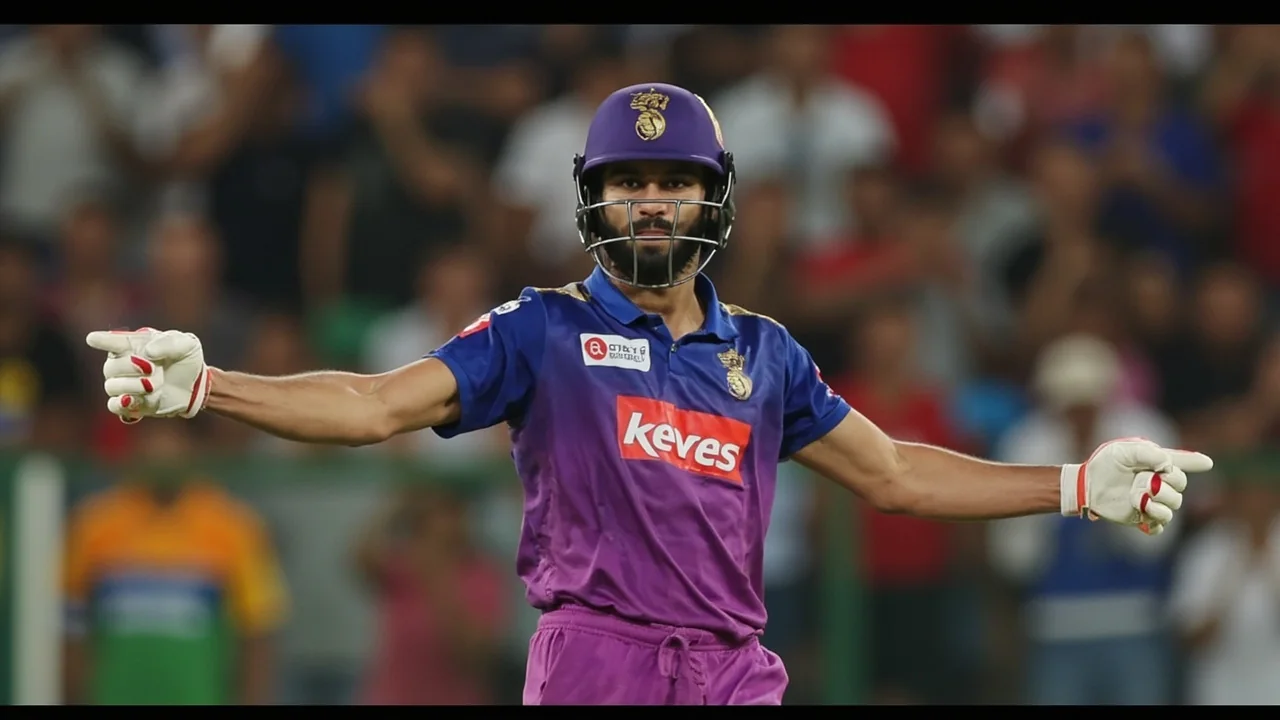
By the time the IPL 2026 league stage ended on 25 May, the Kolkata Knight Riders' season had already been settled for two matches. Rajasthan Royals had beaten Mumbai Indians. Delhi Capitals had then beaten KKR by 40 runs in the final fixture. The arithmetic had nothing left to add: seventh place, 13 points, a net run rate of -0.147, and a second straight season outside the playoffs. What makes the campaign worth a closer look is not the final week but the shape of the rest of it. KKR opened the tournament by going five matches without a win and adding a no result in the sixth. They then won six of the next seven. The middle stretch was good enough to bring a slim playoff chance back to life. The opening stretch was just bad enough to leave too much ground to recover.
That is the core finding of the Times of India's end-of-season review: a horror start that broke the rhythm of captain Ajinkya Rahane's side before the first overseas consolidation window had even closed, and a campaign that never really recovered its footing afterwards. For fantasy managers who tracked the team week by week, the visible pattern matches the ledger exactly. KKR's ceiling was high. Their floor was unusually low and was set before the season had found its shape.
Look at the early-season numbers and the rest of the campaign reads like a reaction to them. Five defeats and one no result in the first six league games gave KKR a single point from the phase in which most playoff contenders put away between eight and twelve. By the time the side had assembled a five-match win streak, the points gap to the top four was already wider than the remaining fixtures could close. The Indian Premier League's league stage is fourteen matches long. To go from one point after six matches to a top-four finish at fourteen requires a near-perfect run in games seven through fourteen. KKR did collect twelve of a possible fourteen from there. It was not enough.
There is a clean lesson in the recovery, too. A six-of-seven run is a genuine title-contender streak in any context. The failure was not in the response. It was in the depth of the hole that the response had to climb out of. IPL 2026 was, for KKR, a season in which the same side produced a top-tier mid-table run and a top-tier bottom-of-table run in the same campaign. The two strands did not balance. The first one set the ceiling, and the second one set the standing.
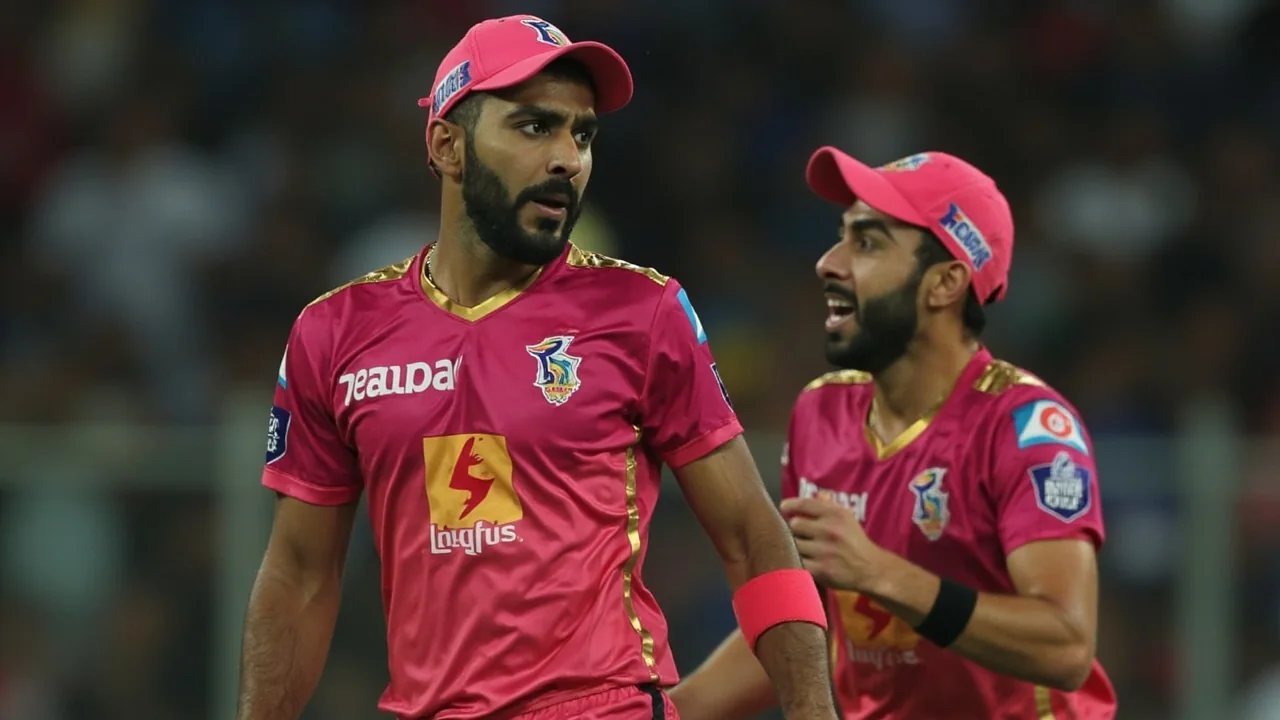
Rahane carried the opening role and the captaincy in IPL 2026 and the numbers he produced are useful rather than dominant. 335 runs in fourteen innings at a strike rate of 135.08. That is a season-long average of just under twenty-four runs per match, with a scoring speed that sits between anchor and accelerant. The captain finished with neither the explosive powerplay returns the team had planned around him nor the big match-turning innings that the side needed to push up the table.
The Times of India review lands the fairest version of the assessment: Rahane was steady, sometimes excellent in patches, but rarely the player who dragged a chase over the line under scoreboard pressure. For fantasy managers, that read maps directly to a captain-pick valuation that should never have been the most expensive in a KKR XI. Rahane was a captain-pick in the same sense that a veteran international is a captain-pick: the floor was reliable, the ceiling was bounded. What he could not do was single-handedly absorb the early-season damage done by teammates whose own seasons never quite caught fire.
For the side, the more telling number is the team's running rate of victories during the recovery stretch, which depended on contributions from younger players doing jobs that would normally have been carried by senior overseas signings. That is the cleanest route into the most important set of problems that defined KKR's IPL 2026: the bowling resources that never quite lined up in the way the auction had been designed to allow.
KKR bought Matheesha Pathirana for Rs 18 crore at the IPL 2026 auction. On paper, that was the headline buy of the cycle. In practice, Pathirana joined the squad late. The reason was a left calf injury he had picked up playing for Sri Lanka at the T20 World Cup. By the time he was fit, the season was already under way. His first appearance came against Gujarat Titans and was cut short at 1.2 overs. A hamstring injury ended the outing. From Rs 18 crore and franchise cornerstone to 1.2 overs of cricket before injury stopped him in his tracks.
The review is unflinching about what that did to the bowling unit. KKR's planned pace combination had built around Pathirana's specific skill: hard lengths, attacking lines, late swing into the right-hander. Without him, the role did not disappear. It got distributed across a less coordinated group, and the side lost the option of pinning batters into holding patterns during the middle overs. The bowling stayed serviceable. It never became a match-defining feature.
For fantasy managers, the Pathirana situation is the clearest example of how the season's outcomes were baked in by off-field events that no in-game adjustment could undo. Price had been paid. Availability had not been secured. By the time Pathirana was fit enough to feature, KKR's tournament was already on the back foot.
The Mustafizur Rahman situation is shorter but no less decisive. KKR bought Mustafizur for Rs 9.2 crore in the same auction window. The Bangladesh left-arm seamer was a strong fit for the role of new-ball wicket-taker on the kinds of surfaces KKR expected to face on its home schedule. He was released during the tournament on instructions from the BCCI linked to geo-political developments. The exit was not a tactical decision by the franchise. It was a regulatory instruction that left the side without an asset they had already booked and paid for. The bowler's exit left a major bowling void that no other squad member was immediately designed to fill.
The cumulative effect of the two losses was significant. KKR's IPL 2026 bowling unit started the campaign with two of its highest-paid assets removed from the rotation before the fifth match and never had both available at the same time. Whatever the recovery stretch achieved at the batting end, the bowling end was operating with a smaller set of tried options. That explains, more than any single tactical decision, why the side that won six of seven in the middle of the tournament still finished with a negative net run rate.
Varun Chakravarthy's IPL 2026 split the season cleanly into two halves. He went wicketless across KKR's first three games and then took ten wickets in the next four. The split is unusual enough on its own. What makes it worth pausing on is how Chakravarthy was getting through the work. He was managing knee and crutch issues that were visible in his movement between overs. He was not bowling at full tilt. He was bowling at the batter, on his preferred lines, and trusting the variations to do the work that the body could not.
For fantasy managers, Chakravarthy remains the single most useful KKR asset to have rostered through IPL 2026. The wicket-taker is the fantasy points engine. Even a partially mobile Chakravarthy produced match-winning hauls because his stock ball is one of the more unplayable deliveries in the tournament on Indian surfaces. The fact that he produced those numbers while visibly compromised makes the season-long argument for him even stronger heading into the next auction cycle, not weaker.
The wider point is about what the side was forced to build around. When a frontline spinner is doing his best work while wrapped in strapping tape and managing a chronic knee issue, the rest of the bowling unit has to over-deliver to compensate. The numbers through the recovery streak show that, in patches, the rest of the unit did. They could not sustain it long enough for the league table to be rearranged.
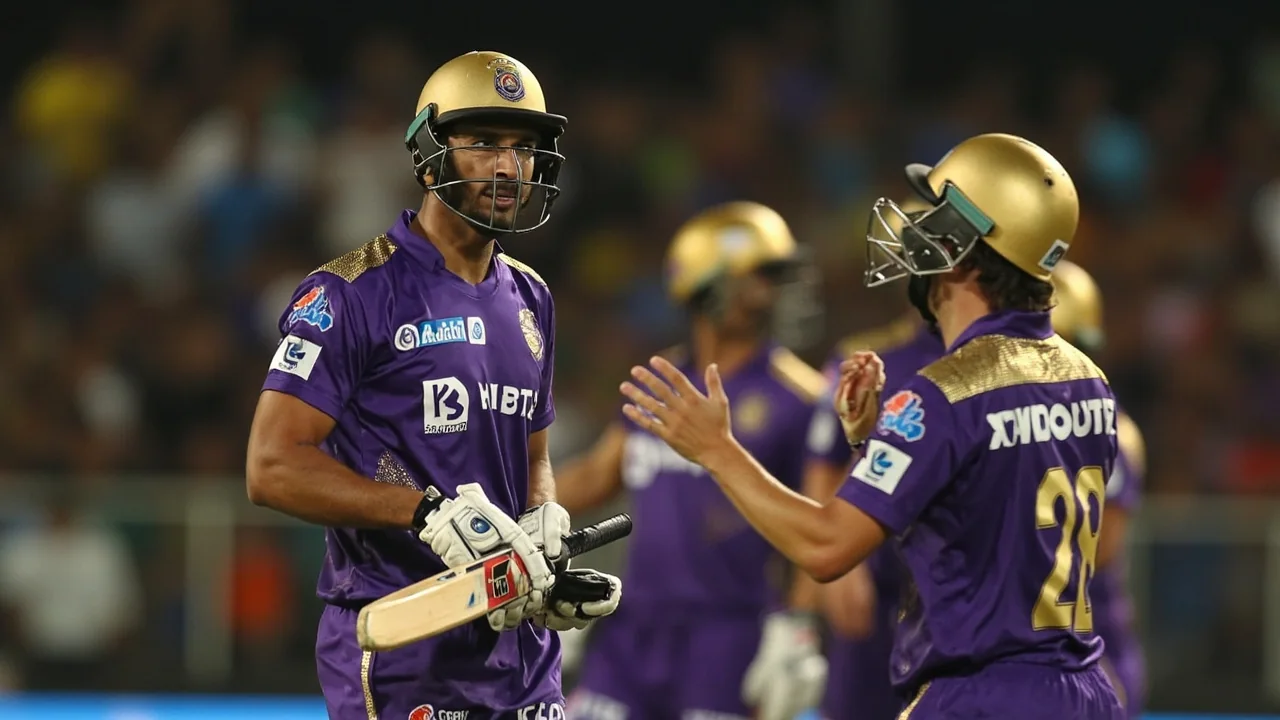
The cleanest counter to a difficult captaincy season was the breakthrough campaign of Angkrish Raghuvanshi. The 21-year-old finished IPL 2026 as KKR's highest run-scorer: 422 runs across thirteen matches at an average of 42.20, while keeping wicket for parts of the season. The combined top-order-plus-keep role is the kind of multi-skill workload that lifts a young player's price in fantasy contests in a single season. Raghuvanshi did the work that veterans in similar KKR seasons had been expected to do, and he did it without breaking the team balance.
For fantasy managers evaluating the 2026-27 cycle, Raghuvanshi's profile is now firmly in the upper-middle band. Multi-skill wickets-plus-bat picks are scarce in any IPL auction. Raghuvanshi produced enough runs to deserve the multi-role classification rather than be treated as a batting-only asset whose keep is a side benefit. For KKR's strategic planning, the same lesson applies. The franchise ended the season with a young Indian core piece whose next IPL is almost certainly going to be priced higher in the auction than his Rs retentions would have suggested going in.
Raghuvanshi's campaign is also a useful counter-balance to the senior overseas-side disappointment. The Pathirana situation, the Mustafizur release, and Rahane's middling returns all pointed to a side that was short of a final lift. Raghuvanshi quietly provided one at a lower salary slot, while holding a glove when required. The review singles out his run-scoring as KKR's clearest positive from the season. The fantasy lesson to take from that is structural, not statistical: identify which franchises are carrying young Indian multi-skill players on small contracts and price them upward as soon as those players are confirmed in the playing XI.
The other marquee domestic story out of IPL 2026 for KKR was Kartik Tyagi. Bought for Rs 30 lakh after going unsold in IPL 2025, Tyagi finished the 2026 league stage with 18 wickets. That placed him third on the list of Indian bowlers by wicket count across the season. For a player bought at the lowest tier of base price, the comparison against his own purchase value is the headline number. For the side, the comparison against the missing Pathirana overs is the contextual one.
Tyagi's path through the season is a familiar IPL story: low auction price, late bid, immediate role, sustained performance. What makes his specific campaign interesting for fantasy planning is that he took his wickets across phases rather than concentrating them in any one. He had match-defining spells with the new ball. He bowled useful overs in the middle. He held his nerve at the death. The breadth of his role is the reason his wicket count sits where it does and is also the reason any future auction valuation is going to be substantially higher than the Rs 30 lakh price KKR paid.
For a side that lost Pathirana and Mustafizur before May, finding an 18-wicket Indian seamer at base price is the kind of return on a single auction slot that gets a campaign back on its feet. Tyagi did that. He did not quite do it alone, but he did do it consistently enough that the recovery stretch had a bowler it could set up around. The result was the late-season six-of-seven run that briefly kept the playoff arithmetic alive.
By the final week, the recovery stretch was no longer enough. KKR needed a specific sequence of results to stay alive and to advance. First, Rajasthan Royals had to beat Mumbai Indians. That happened. Then, in the last fixture, KKR had to beat Delhi Capitals and lift their net run rate above the chasing pack. They lost by 40 runs. The season ended in the same week it had effectively been decided: the second week, when the winless run prevented the points from ever reaching a reasonable playoff pace.
For fantasy contest strategy, the collapse of the final week is the part of the season to study for what it tells you about captain-pick discipline in must-win matches. KKR's batting order in that fixture had to be selected on form, not on price. The team chose to back the players who had delivered the recovery stretch. The result was not close. In the largest contests, where captain-pick cycles depend on swing, the lesson is straightforward: when a side is in must-win territory, the captain should be a player whose recent ceiling matches the asking, regardless of the regular-season average. That was the choice KKR made. The match did not turn their way.
Take the campaign apart and three things are worth carrying forward. The first is that the side's young Indian core, led by Raghuvanshi, finished the season with the kind of form that should change how the franchise approaches the next mega auction. The second is that the bowling unit can be rebuilt around a fit Pathirana, a fit Chakravarthy and a Tyagi who has now earned a multi-year contract at top-tier money. The third is that the captaincy conversation is real but not yet resolved. Rahane produced a 335-run season. That is a working season, not a franchise-defining one. A side trying to break back into the top four will need to test alternatives at some point in the next cycle.
For KKR, the season that ended on 25 May 2026 is best read as an inflection campaign rather than a setback campaign. The young Indian multi-skill players improved. The headline overseas buys arrived late, in poor shape or not at all. The team came within one win and a few boundaries of forcing a playoff fight. The next cycle does not need to invent answers. It needs to clear the structural obstacles that kept the answers from being used in this one.
For broader coverage of the IPL 2026 season, including fantasy impact analysis, team form notes and the rest of the season reviews for the eight other franchises, the full IPL 2026 archive on Come Sports collects match reviews, captain-pick cycles and squad notes in one place.
Kaif's Cricbuzz case for keeping Kohli and Rohit, with a Messi parallel and Gill named as 2027 captain.
Every confirmed India men’s fixture for the rest of the calendar year.