India Cricket Schedule 2026: ODI, Test & T20I Fixtures From July to December
Every confirmed India men’s fixture for the rest of the calendar year.
On 18 July 2026, former India batter Mohammad Kaif went on Cricbuzz and made the most concrete public case yet for keeping Virat Kohli and Rohit Sharma inside the 2027 ODI World Cup squad. His frame of reference was football, not cricket: a 39-year-old Lionel Messi still dragging Argentina into a World Cup final.
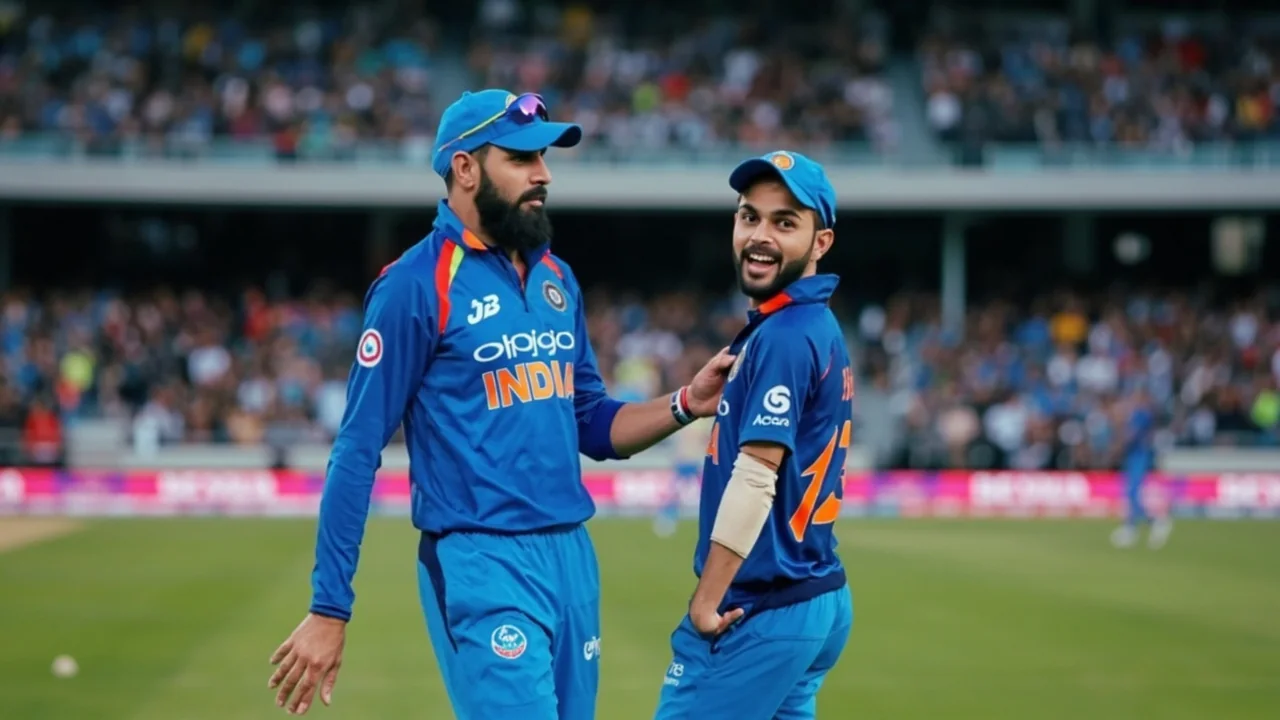
Nine days before India landed in Harare for the Zimbabwe T20Is, Mohammad Kaif used a Cricbuzz appearance to settle, in his own voice, the selection argument that has quietly followed Indian white-ball cricket since the Champions Trophy. His pitch was simple: the 2027 ODI World Cup, scheduled across South Africa, Zimbabwe and Namibia, will be played on bouncy surfaces that punish inexperience. A side cannot walk into those conditions without Virat Kohli and Rohit Sharma and expect the older players to be replaceable on demand.
Kaif has made this argument before. What made the 18 July 2026 appearance different was the framing device. He reached across sports and pulled in Lionel Messi’s run at the 2026 FIFA World Cup — a 39-year-old playmaker whose Argentina side reached the final, whose semifinal did not feature a goal but did feature two assists, and whose mere presence on the pitch altered how every opponent defended. Kaif’s translation was direct. Kohli and Rohit function the same way in this Indian ODI side. They change how bowlers plan, how captains set fields, and how the dressing room processes a collapse. That is not nostalgia. That is roster construction.
Kaif’s strongest line was unscripted in feel: “The 2027 phase will be very important. People are talking about Virat Kohli and Rohit Sharma because it won’t be an easy World Cup.” The sentence does two things at once. It acknowledges the public debate about whether India should look past the senior pair, and it reframes that debate around venue rather than sentiment. South African pitches in late 2027 are widely expected to bounce and carry. Zimbabwe’s slow turners in Bulawayo and Harare demand different batting discipline. Namibia, a newer Test-playing venue, has its own altitude and weather profile. Kaif’s underlying point is that none of those surfaces is a forgiving place to blood a young top order with no Plan B.
He then sharpened the comparison. Messi did not need to score in every knockout game to be Argentina’s most important player in 2026. His job was to occupy defenders, drag markers out of position, and convert half-chances into assists. Kohli and Rohit, on Kaif’s reading, play a similar structural role in India’s ODI batting order. They do not need to anchor every chase. They need to be on the field for the parts of the innings where the match is decided.
Kaif closed the argument with a personnel call. He named Shubman Gill as India’s captain for the 2027 tournament and said Kohli and Rohit will be needed “100 per cent” in those South African conditions. That is not a hand-waving endorsement. It is a public alignment with Gill as the next white-ball captain while keeping the senior pair inside the playing XV. The framing — Gill leads, Kohli and Rohit play — avoids the binary that has consumed most of the selection conversation in 2025 and 2026.
Kaif did not speak into a vacuum. The Lord’s ODI against England earlier in the 2026 summer had already triggered a separate retirement rumour cycle, with some commentary suggesting the third match might serve as Rohit’s ODI farewell. BCCI secretary Devajit Saikia publicly rejected that framing well before Kaif’s Cricbuzz appearance. The two interventions, taken together, do not constitute a final squad announcement. They do establish that the BCCI and at least one senior former cricketer are aligned on one fact: the 2027 squad will not be decided by sentiment around a single match at Lord’s.
That matters for fantasy managers because it removes a layer of short-term speculation from the price of senior players in India ODI contests. When a board openly rebuts a retirement narrative and a respected former player publicly backs the same players, ownership projections for the next ODI window can be priced on form and role rather than on whispered goodbyes.
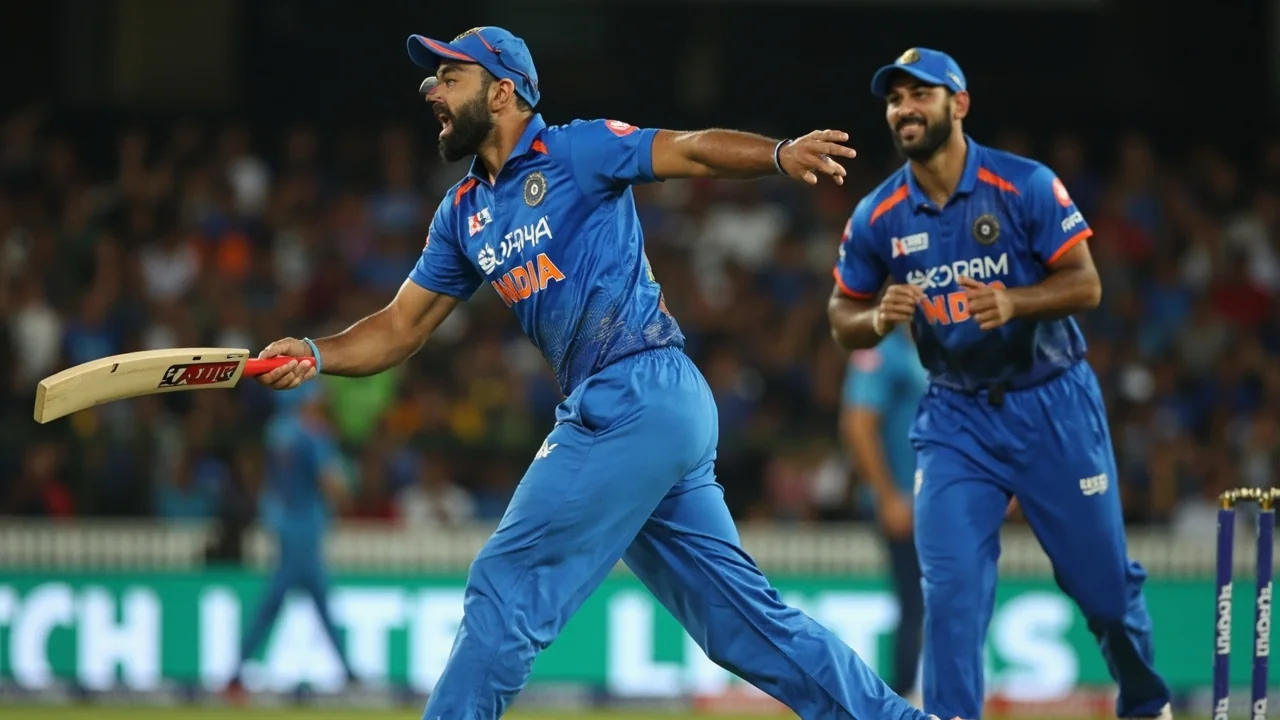
Football analogies in cricket commentary often collapse under their own weight. This one holds up because Messi’s 2026 tournament fits a specific pattern that Indian cricket has begun to mirror. Argentina did not rebuild around a teenage forward pool. They carried their ageing captain into the business end of the tournament, accepted that his goal threat would vary, and built the rest of the side around the spaces he created.
India’s ODI batting order in 2026 has been drifting toward a similar shape. Gill at the top with the license to bat through the innings. Yashasvi Jaiswal as the left-handed counterweight. Kohli in the anchor role he has held since 2017, but with a smaller workload per series. Rohit either opening or returning at first change, depending on opposition. The Messi parallel asks a sharp question: if Messi’s presence was non-negotiable for Argentina in 2026, why would India treat Kohli and Rohit as optional for an away World Cup played on three different kinds of surface?
Kaif’s argument is therefore not that Kohli and Rohit should start every game. It is that they should be selected for the tournament, and that the side around them should be built to extract maximum value from their specific skills. That is a squad-construction argument dressed as a nostalgia argument. For fantasy players the distinction matters because the price of senior India players in 2027 contests will be driven less by sentiment and more by how clearly their role is defined inside the new structure.
A second strand of Kaif’s comments is less quoted but more useful for fantasy planning. He did not argue for an unchanged India. He argued for a gradual blend, with players like Jaiswal developing their game under Kohli and Rohit rather than being asked to replace them mid-cycle. The language was deliberately measured. No abrupt retirements, no sudden omissions, no mass selection reset.
Translated into practical terms, this is a roadmap for how India’s ODI squad will probably look across the 2026-27 window. Senior players hold defined roles. Younger players are added around them, not instead of them. Selection pressure is applied inside series, not across tours. For fantasy managers, the gradual-blend case has a clear implication: ownership percentages for Kohli and Rohit should be priced on role security rather than on the moment-to-moment form swings that have dominated the white-ball cycle since the Champions Trophy.
The Messi analogy sharpens the gradual-blend case further. Argentina did not give Messi every minute of every game in 2026. They rotated him, rested him in group fixtures, and brought him back for the matches that mattered. India can apply the same logic. Rest Kohli in home bilateral ODIs against weaker attacks, rotate Rohit across formats, and bring both into the XI for the specific fixtures — South African conditions, knockout cricket, high-pressure chases — where their experience is the largest single edge the side has.
The most immediate fantasy consequence is price stability. Senior India players in ODI contests tend to swing wildly between “must-pick captain” and “fade against pace” in any given week. Kaif’s comments, combined with Saikia’s earlier BCCI pushback, should narrow that swing. Both players still belong in the discussion for away fixtures, against pace-heavy attacks on bouncy surfaces, and in chase scenarios where the asking rate climbs past eight an over in the back half.
The second consequence is around the next generation. Jaiswal, Ruturaj Gaikwad, Rinku Singh, and the all-rounders who have started to find ODI rhythm in 2026 will continue to find spots. But those spots will be complementary rather than replacement. A fantasy XI that tries to draft a fully post-Kohli India before the 2027 squad is announced will overpay for differential ceiling and underpay for the structural value the senior pair still provide.
The third consequence is around captaincy. With Gill named as the 2027 captain in Kaif’s framing, fantasy managers can start to price captain-pick cycles around Gill as the long-term anchor while Kohli and Rohit retain their match-by-match leverage. That is a subtle change from the early-2026 cycle, when captain-pick conversations in India ODI contests kept returning to the question of whether Rohit would still be opening by the time the World Cup arrived.
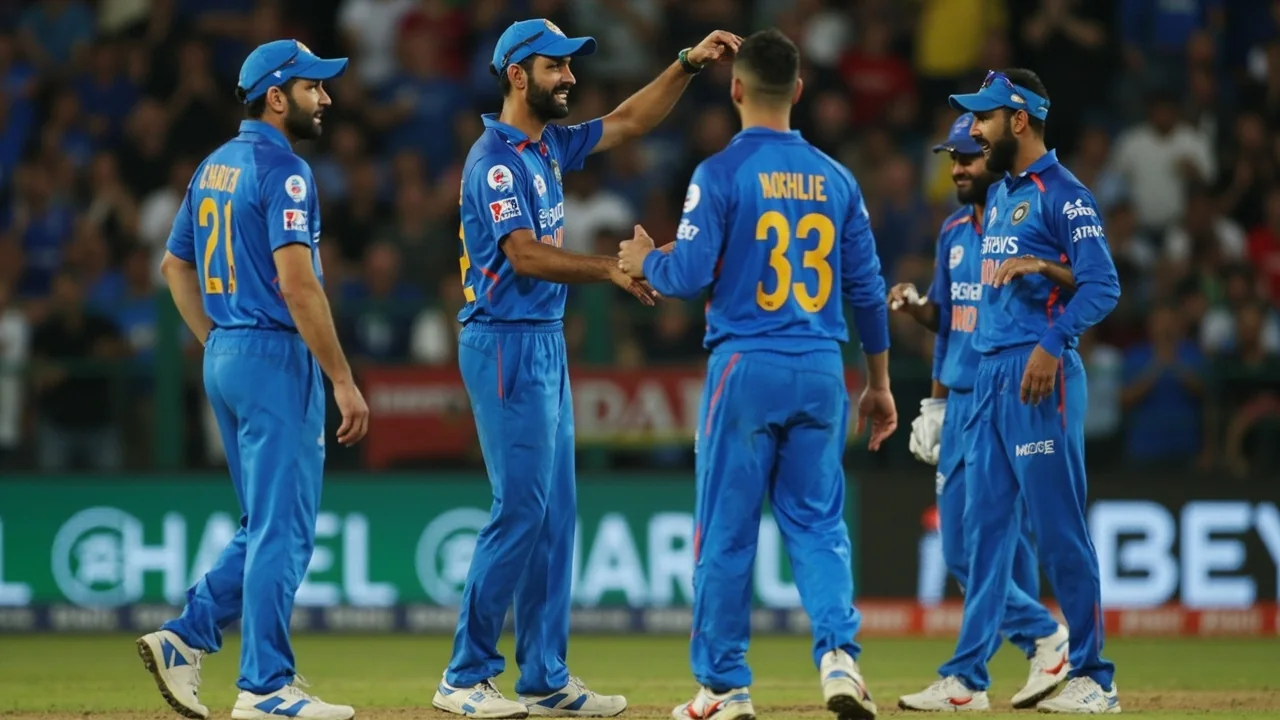
Kaif’s comments are a strong directional signal, not a selection order. The BCCI selection committee has not published the 2027 World Cup squad and will not do so for many months. Between now and then, several questions will resolve themselves on the field rather than on television.
First, Rohit’s ODI workload across the rest of 2026. India’s white-ball calendar includes bilateral series and the Asia Cup window. How many ODIs Rohit plays, and at what position, will be the cleanest single data point on his ODI future. Second, Kohli’s away form against pace attacks in 2026-27. The conditions that Kaif flagged as decisive are the same conditions where Kohli’s historical numbers are strongest. A sustained run in South Africa in early 2027 would settle any remaining debate. Third, Gill’s captaincy audition. If Gill leads India in the 2026 Asia Cup and through the away ODI series, the Gill-leads-Kohli-and-Rohit-play structure that Kaif described becomes the actual operating model rather than a commentator’s preference.
Until those three things resolve, fantasy managers should treat senior India prices as anchored but not locked. The Messi comparison Kaif made has done one useful thing immediately: it has put the case for continuity on the public record in language that selectors, broadcasters and fantasy platforms can all read.
The India-Kohli-Rohit-Messi cross-sport analogy is interesting precisely because it lands in a moment when several cricket boards are wrestling with the same question. Australia took Steve Smith and Glenn Maxwell to the 2024 T20 World Cup despite form dips. England carried Ben Stokes into the 2026 home ODI cycle at a reduced workload. South Africa kept Kagiso Rabada in the T20 setup through 2025 despite injury management questions. The pattern is consistent: elite boards do not phase out senior players in the middle of a World Cup cycle. They phase them down between cycles.
Kaif’s contribution was to make that pattern explicit and to attach it to a cross-sport precedent that even non-cricket readers would recognise. The fantasy consequence, for India contests and for the wider global fantasy market, is that the next eighteen months of ODI pricing will lean more on continuity arguments and less on reset narratives than the previous cycle did.
The next real data point is India’s 2026 Asia Cup campaign. The composition of India’s batting group there, and how Rohit and Kohli are used inside it, will be the cleanest single test of whether Kaif’s gradual-blend case is being adopted inside the dressing room. After the Asia Cup, the away ODI series in early 2027 — likely South Africa and New Zealand — will provide the surface conditions Kaif described as decisive.
For fantasy managers, the practical discipline is straightforward. Do not fade the senior pair on price alone. Do not lock them in regardless of opposition. Treat the role-first, form-second principle as the operating rule for India ODI contests between now and the squad announcement. That is the same logic Kaif applied when he reached for the Messi comparison: not because nostalgia makes for good television, but because a 39-year-old’s value is measured by what changes around him, not by what he scores in any single match.
For ongoing squad notes, captain-pick changes and fantasy impact analysis as the 2026-27 ODI window unfolds, follow the Come Sports cricket news desk.
Every confirmed India men’s fixture for the rest of the calendar year.
Three T20Is in Harare, 16:30 IST starts, India form slide and Zimbabwe World Cup context.